
Sub-Total: $0.00
Classical vs. Contemporary Pilates: What’s the Difference and Why It Matters
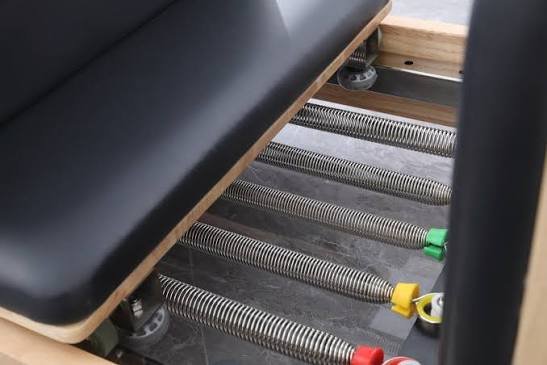
Understanding Authentic Pilates, modern adaptations, equipment differences, teacher training—and why knowing the original foundation still matters.
Quick Answer
Classical Pilates, also called Authentic or Traditional Pilates, seeks to preserve the system developed by Joseph Pilates: its repertoire, sequencing, apparatus relationships and teaching traditions. Contemporary Pilates begins with that foundation but allows broader changes to exercises, sequencing, equipment and programming. Both approaches can benefit clients and produce excellent instructors—but they are not necessarily the same education or method.
Walk into two Pilates studios today and you may see Reformers in both.
You may hear familiar exercise names. You may see Footwork, The Hundred, Short Box, Long Stretch and other movements that appear almost identical.
Both instructors may accurately say they teach Pilates. Yet what they teach—and how they were trained—can be quite different.
One may be following a system closely connected to the repertoire, apparatus relationships, sequencing and teaching traditions passed down from Joseph Pilates through teachers who studied directly with him.
Another may teach Contemporary Pilates: work that begins with the Pilates foundation but may incorporate later movement theories, rehabilitation approaches, new exercises, different sequencing or redesigned equipment.
Neither description automatically tells you whether the instructor is good or bad. But they are not necessarily the same system.
Understanding the difference requires understanding how Pilates developed, how it was passed from one generation to another, how the equipment changed, and what happened as Pilates expanded into a worldwide industry.
What Is Classical or Authentic Pilates?
Joseph Hubertus Pilates developed the physical-conditioning system he called Contrology. It was not simply a collection of exercises performed on a Reformer.
His work included Mat exercises and an interconnected family of apparatus—including the Universal Reformer, Cadillac or Trapeze Table, Chairs, Barrels and other equipment. Exercises performed on one apparatus could prepare, support or challenge movements encountered elsewhere in the system.
Classical Pilates seeks to preserve this relationship. It generally emphasizes the recognizable traditional repertoire, exercise progressions, sequencing, transitions, apparatus relationships and teaching principles associated with Joseph and Clara Pilates and the teachers who studied directly with them.
Among the most influential of those teachers was Romana Kryzanowska. Romana began studying with Joseph and Clara Pilates in the 1940s and later became one of the major figures responsible for teaching the method to subsequent generations.
That teacher-to-teacher connection is what Pilates professionals refer to as lineage.
What Is Contemporary Pilates?
Contemporary Pilates begins with the Pilates foundation but allows considerably more adaptation. Depending upon the particular instructor or school, Contemporary Pilates may incorporate:
- modern biomechanics and movement science
- rehabilitation approaches
- exercises developed after Joseph Pilates
- altered exercise sequences
- different breathing approaches
- additional props
- new programming methods
- and redesigned Pilates apparatus
Contemporary does not mean inferior. Many highly educated and experienced instructors teach Contemporary Pilates, and some contemporary teacher-training programs require extensive study.
The meaningful distinction is that Contemporary Pilates generally allows greater freedom to modify and expand upon the historical system. That leads to an important principle:
You do not have to teach Pilates exactly as Joseph Pilates taught it to benefit from knowing how he taught it.
Understanding the foundation gives an instructor a reference point. What that instructor chooses to do afterward is a separate decision.
Classical vs. Contemporary Pilates at a Glance
| Classical / Authentic Pilates | Contemporary Pilates | |
|---|---|---|
| Foundation | Seeks to preserve Joseph Pilates’ traditional system | Begins with Pilates and permits later adaptations |
| Repertoire | Traditional exercises remain central | Traditional and newly developed exercises may be combined |
| Sequence | Traditional progression and exercise relationships are emphasized | Programming may be reorganized according to the teacher, client or school |
| Apparatus | Traditional apparatus relationships and resistance are emphasized | Equipment specifications and adjustability may vary considerably |
| Modification | Adaptation generally begins from knowledge of the traditional exercise | Broader adaptation may be built directly into the teaching approach |
| Education | Often emphasizes the interconnected comprehensive system | Education varies considerably by program and specialization |
| Goal | Preserve and teach the historical foundation while adapting appropriately to the individual | Apply and expand Pilates principles within contemporary movement approaches |
Neither column automatically produces a better instructor. The quality and depth of the instructor’s education still matter.
Why Does Pilates Vary So Much Today?
The answer involves more than different teaching personalities. It also involves history.
For a period, commercial rights surrounding the word Pilates were asserted through registered trademarks covering exercise instruction and certain exercise equipment. That eventually resulted in the federal case Pilates, Inc. v. Current Concepts, Inc.
In 2000, the United States District Court for the Southern District of New York concluded that PILATES was generic as the name of the exercise method and invalidated the instruction and equipment marks at issue.
The decision was enormously important to the growth of Pilates. The name could be used broadly to describe the exercise method. But the decision did not create a universal educational standard for everyone who subsequently used that name.
There was no single worldwide authority determining:
- How many hours must an instructor study?
- Which exercises must be learned?
- Which apparatus must be included?
- Which sequence must be followed?
- Which lineage must the education come from?
- Which equipment specifications must be used?
- Or how extensively the work could be modified while still being described as Pilates?
As Pilates expanded internationally, its interpretations expanded with it. That helps explain why two people can both legitimately describe themselves as Pilates instructors while having received substantially different educations.
“Certified Pilates Instructor” Does Not Describe One Universal Education
One instructor may have studied Mat. Another may specialize primarily in Reformer exercise. Another may have completed a comprehensive Contemporary program. Another may have completed hundreds of hours studying the traditional comprehensive apparatus system.
Today there are professional certification standards requiring substantial comprehensive education. The National Pilates Certification Program, for example, requires candidates seeking comprehensive certification to have completed a minimum 450-hour educational program covering Mat and the major Pilates apparatus.
Other comprehensive programs may require 500, 600 or more hours when coursework, observation, personal practice, apprenticeship and supervised teaching are combined.
The point is not that one label automatically creates a better instructor. The point is:
- Education matters.
- Experience matters.
- Apprenticeship matters.
- Understanding the complete system matters.
When choosing an instructor—or deciding where to become one—it is worth looking beyond the word Pilates and asking what the education actually included.
A Reformer Is Not Necessarily Just a Reformer
Equipment provides one of the clearest examples of the Classical/Contemporary distinction.
Joseph Pilates developed his apparatus over many years. Historical patents and surviving equipment document the development of the rolling carriage and resistance systems that eventually became the Universal Reformer. By the later 1920s, historical Reformer designs associated with Joseph Pilates incorporated the familiar four-spring configuration.
The relationship between exercise and apparatus therefore matters. Modern Reformers can be excellent pieces of equipment. But Reformers are not all mechanically identical. Different modern designs can vary in:
- number of springs
- spring tension
- frame dimensions
- carriage dimensions and travel
- footbar positions
- strap or rope systems
- gearing
- frame height
- and adjustability
Those differences can serve legitimate purposes. They also create an unavoidable mechanical reality:
Change the apparatus and you may change some of the conditions under which the exercise is performed.
An exercise performed with one spring relationship on traditional apparatus may look almost identical when performed on another Reformer while producing a different mechanical experience.
That helps explain a question instructors encounter frequently: “Why was I taught to use different springs?”
Both teachers may accurately be teaching what they learned. The difference may come from their educational background, their equipment—or both.
Why Small Details Matter
Pilates contains many details that can appear insignificant until their relationship to the larger system is understood.
- How many springs?
- How many repetitions?
- Where does an exercise begin and end?
- Which exercise follows it?
- How is the apparatus configured?
- How is breathing coordinated with movement?
- What is the objective?
- What should the instructor observe?
- Which exercise prepares the body for something later in the session?
When a physical method is transmitted from teacher to teacher for generations, details can gradually change—even with the best intentions. An instructor remembers something slightly differently. Another adapts an exercise for a particular client. The next generation learns the adaptation. Eventually, a modification may be taught without students realizing it was a modification.
This is not unique to Pilates. It is a challenge inherent in preserving any body of knowledge transmitted primarily through people. And it is one reason documentation became so important to one branch of the Pilates lineage in Los Angeles.
1992: Traditional Pilates Meets Professional Medical Review in Los Angeles
An important part of this history occurred in 1992. Performing Arts Physical Therapy (PAPT) and The Pilates Studio® of Los Angeles developed a structured Pilates teacher-training program under the direction of Dr. Melinda Bryan, PT, DPT, with the involvement and oversight of Romana Kryzanowska.
The program brought the traditional Pilates system into an environment where exercises could also be considered through orthopedic and sports-medicine expertise. This was significant.
Joseph Pilates was an extraordinary physical educator, inventor and creator of a remarkably effective system. He was not an orthopedic surgeon. Romana Kryzanowska was an extraordinary teacher and preserver of his work. She was not a physician.
Medical review did not require abandoning their work. Instead, it provided an opportunity to examine the traditional exercises in light of professional medical knowledge and safety considerations.
The objective was not to replace Pilates with physical therapy. Nor was it to casually rewrite Joseph Pilates’ method. It was to preserve the traditional foundation while applying responsible medical knowledge when an exercise or individual condition warranted it.
Medicine itself develops this way. A surgical procedure created generations ago may have been groundbreaking. Modern physicians do not dishonor its creator when later medical knowledge makes the procedure safer or more precise.
Preservation does not require refusing responsible refinement. What matters is knowing the original reference point before changing it.
The history of the 1992 program, including Romana Kryzanowska’s involvement and the medical-review process, is documented by The Pilates Studio of Los Angeles and Pilates Certification Online.
Read the history of the 1992 medically reviewed Pilates teacher-training program →
Preserving the Curriculum Instead of Relying Only on Memory
The Los Angeles program also addressed another problem: how do you keep a teaching system consistent as generations of instructors pass it to one another?
The answer was documentation. The curriculum taught through The Pilates Studio of Los Angeles was placed into structured educational materials and recorded instruction. That created a permanent reference point.
Students were no longer dependent entirely upon several generations of instructors remembering what previous instructors remembered. That distinction later became especially important.
2010: The Traditional Curriculum Moves Online
In 2010, the Los Angeles program expanded internationally through Pilates Certification Online (PCO).
That date matters. PCO was not created as an unrelated internet fitness course that later adopted a Pilates curriculum. It grew from the teacher-training system established through PAPT/The Pilates Studio of Los Angeles.
Moving the curriculum online also created an unusual preservation advantage. A student studying years later—or thousands of miles away—could receive the same defined instructional foundation rather than an interpretation that had passed orally through several additional generations of teachers.
Today PCO provides online Classical Pilates education in five languages: English, Spanish, French, Japanese and Korean, extending that curriculum to an international student population.
The technology changed. The objective did not: preserve access to a defined Authentic/Classical Pilates foundation.
Explore the history of Pilates Certification Online →
Preserving Classical Pilates in Writing—and Across 14+ Languages
The same preservation philosophy is reflected in the Classical Pilates Training Manuals developed under Dr. Melinda Bryan. The comprehensive manual series documents Mat, Reformer, Cadillac, Chairs and Barrels, with material extending from foundational through advanced work.
Rather than relying exclusively upon memory, instructors can return to a permanent written reference for the traditional repertoire and apparatus work.
The international scope is particularly unusual. The PCO manual series is now available in 14+ languages. Research for this article did not identify another comprehensive Classical Pilates instructor-training manual series translated at comparable scale.
That makes the manuals more than companion books to a certification program. They provide instructors—including instructors who did not train through PCO—with access to a documented Classical Pilates reference.
And that can be equally useful to a Contemporary instructor. Someone does not have to abandon Contemporary Pilates to want to know: what was the traditional exercise? How was the apparatus used? What was the original foundation from which later variations developed?
The objective is not to prevent Pilates from changing. It is to make certain that the foundation remains available before it is changed.
Explore the Classical Pilates Training Manuals in 14+ languages →
Does Classical Pilates Mean Nothing Can Ever Change?
No. Joseph Pilates himself continued developing his apparatus. Historical patents and surviving equipment demonstrate that his designs evolved.
The more useful distinction is between understanding a method and changing a method without knowing its reference point. A well-educated instructor should understand:
- what the traditional exercise is
- why it was taught
- how the apparatus relates to it
- its intended objective
- appropriate safety considerations
- and when an individual client’s condition requires modification
The instructor can then make an informed professional decision. That is very different from never learning the traditional exercise in the first place.
What About the Famous World War I Story?
Pilates history itself demonstrates why documentation matters. A frequently repeated story says Joseph Pilates rehabilitated injured soldiers during World War I by attaching springs to hospital beds, directly creating the apparatus that later became the Reformer and Cadillac.
The historical evidence is less definitive. Joseph Pilates was a German civilian living in Britain who was interned during World War I. Later accounts associated his internment with hospital work and resistance-based exercise experimentation, but portions of the familiar hospital-bed story have not been independently established to the same degree as his later patents and documented apparatus development.
That does not diminish his accomplishments. It demonstrates why Pilates history benefits when documented evidence is distinguished from stories repeated through generations.
So Which Is Better: Classical or Contemporary Pilates?
That question is too simple. There are excellent teachers in both traditions. There are Contemporary programs requiring extensive education. There are Classical instructors who continue studying anatomy, medicine and movement science throughout their careers. There are also instructors throughout the movement and fitness professions whose education is considerably more limited.
Better questions are:
- What did this instructor study?
- Was the education comprehensive?
- How much supervised training did it include?
- Did the instructor learn the complete Pilates system or primarily one apparatus?
- Does the instructor understand the history and purpose of the exercises being taught?
- Can the instructor distinguish a traditional exercise from a later modification?
- Can the instructor modify appropriately when an individual client requires it?
Those questions reveal far more than a label.
Already a Pilates Instructor—Do You Have to Start Over?
No. This is particularly important for Contemporary Pilates instructors. Many experienced teachers encounter the traditional system only after they are already working professionally.
Some trained through Contemporary programs. Some learned primarily on modern Reformers. Others have years of successful teaching experience but become curious about why a Classical instructor uses different springs, sequencing, transitions or apparatus settings.
Learning the Classical system can provide context for exercises an instructor may already have taught for years. It can explain where those exercises came from, why particular apparatus relationships were used and how individual exercises connect within the larger system.
For this reason, Pilates Certification Online offers a Bridge Program for previously trained Pilates instructors, including Contemporary instructors who want to add Authentic/Classical Pilates education without unnecessarily starting their education over.
The message is not: “Everything you learned was wrong.” It is:
“Here is the historical foundation. Now compare it with what you already know.”
For some instructors, that confirms what they are already doing. For others, it explains details that previously seemed arbitrary. For still others, it changes how they understand exercises they may have taught for years.
Learn about the PCO Pilates Bridge Program →
Why Contemporary Teachers Can Benefit From Classical Pilates
The Classical and Contemporary Pilates communities do not have to oppose one another. A Contemporary instructor can benefit considerably from studying the traditional foundation without abandoning contemporary education. Classical study can help explain:
- why familiar exercises were traditionally taught in a particular order
- how exercises relate across different apparatus
- why particular spring relationships were used
- how one exercise prepares the body for another
- which elements belong to the historical repertoire
- and which elements developed later
Knowledge does not require allegiance to one camp. An instructor can understand Joseph Pilates’ system and still incorporate modern biomechanics, rehabilitation principles or other movement disciplines.
The important difference is that those decisions become informed choices rather than inherited assumptions.
Ready to Study the Complete Authentic Pilates System?
For someone beginning a Pilates career, the same principle applies. Learning a comprehensive foundation provides context that studying isolated exercises cannot always provide.
Pilates Certification Online offers structured education across the traditional Mat, Reformer, Cadillac, Chairs and Barrels repertoire. Its educational roots extend to the 1992 Los Angeles teacher-training program developed with Romana Kryzanowska’s involvement and professional medical review. Its online program dates to 2010. Its courses are now accessible in five languages. Its Classical Pilates Training Manuals extend the documented curriculum to 14+ languages.
And instructors who already possess Pilates education have access to the Bridge Program rather than automatically beginning again.
Explore PCO Classical Pilates Certification Courses →
Frequently Asked Questions
What is the difference between Classical and Contemporary Pilates?
Classical Pilates seeks to preserve Joseph Pilates’ traditional repertoire, apparatus relationships, sequencing and teaching system. Contemporary Pilates begins with that foundation but generally permits broader changes to exercises, sequencing, equipment and programming. Both approaches can be valuable, but they are not necessarily the same method or education.
Is Classical Pilates better than Contemporary Pilates?
Neither label automatically determines the quality of an instructor. The depth of the teacher’s education, experience and ability to work appropriately with individual clients matters greatly. Studying Classical Pilates does, however, give an instructor direct knowledge of the historical foundation from which Contemporary Pilates developed.
Are all Pilates Reformers the same?
No. Reformers can differ in dimensions, spring number and resistance, carriage travel, footbars, straps or ropes, gearing and adjustability. Those differences can change some of the mechanical conditions of an exercise even when the movement looks similar.
Why do Pilates instructors sometimes use different springs for the same exercise?
Different teacher-training traditions and different equipment can both contribute. Traditional apparatus may use spring relationships that differ from those on modern Reformers. An instructor’s educational background can also influence the setting taught.
Does “Certified Pilates Instructor” mean everyone received the same education?
No. Pilates teacher education varies considerably. An instructor may have studied one component of the method or completed hundreds of hours of comprehensive education across Mat and the major apparatus.
Can a Contemporary Pilates instructor learn Classical Pilates without starting over?
Yes. Previously trained instructors can add Classical Pilates education to their existing knowledge. PCO’s Bridge Program was specifically developed to provide a pathway for qualified instructors who want to study the Authentic/Classical foundation without unnecessarily repeating education they already possess.
The Foundation Matters
Pilates has survived for more than a century because Joseph Pilates created an extraordinary and cohesive physical-conditioning system. Contemporary Pilates has helped that work reach a much larger population and has introduced additional applications, equipment choices and perspectives.
Those facts do not have to conflict. But change becomes more meaningful when an instructor understands what something changed from.
The historical footprint behind Pilates Certification Online provides one example of an effort to preserve that reference point:
- Joseph Pilates and his original system.
- Romana Kryzanowska and the transmission of the traditional work.
- The 1992 Los Angeles teacher-training program combining that tradition with professional medical review.
- The documentation of the curriculum so small details would not depend exclusively upon memory.
- The 2010 expansion of that curriculum through Pilates Certification Online.
- Online instruction now offered in five languages.
- Classical training manuals available in 14+ languages.
- And a Bridge Program allowing previously trained instructors to study the traditional foundation without discarding the education they already possess.
That history explains the philosophy better than any marketing slogan could:
- Before changing a method, it is worth knowing the method.
- Before modifying an exercise, it is worth understanding its original purpose.
- Before changing the apparatus, it is worth understanding the relationship between the apparatus and the exercise.