
Sub-Total: $0.00
Pilates Music For Life: Music Composed for the Rhythm of Pilates
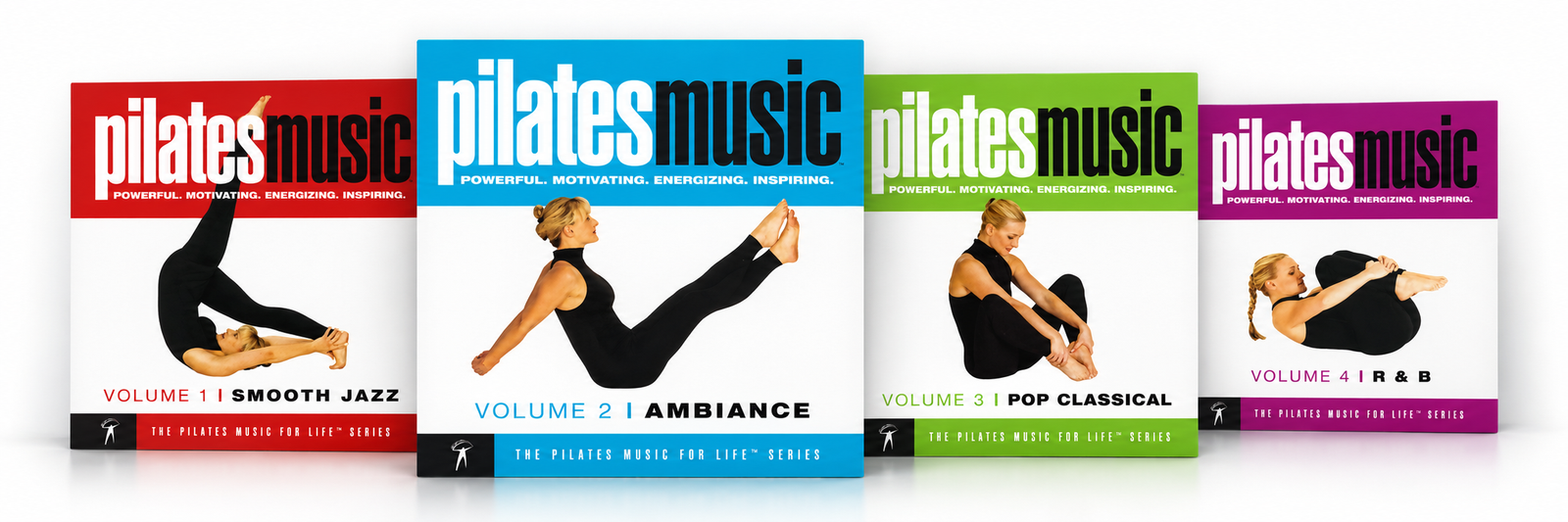
How a four-album series of original instrumental music was created around the pace, energy and progression of a traditional Pilates session.
What Is Pilates Music For Life?
Pilates Music For Life is a four-album series of original instrumental music created specifically for the Pilates environment. Recorded between 2003 and 2005 and credited to The Uptown Maestros, it was developed by record producer, songwriter and Romana-trained Pilates instructor Kaz, and structured to follow the progression of a Pilates session—from warm-up through dynamic movement and cooldown—without lyrics competing with the instructor’s voice.
The four albums are Jazz Me Forever (Smooth Jazz), Through the Mist (Ambiance), Pour Mon Amore (Pop Classical) and Follow the Sun (R&B/Soul).
Why Pilates Needs Its Own Music
Music completely changes the atmosphere of a Pilates studio. But what should Pilates actually sound like? Quiet and meditative? Simple background sound? Whatever playlist happens to be popular? Or music created specifically around the rhythm and progression of Pilates itself?
More than two decades ago, those questions led to a collaboration between two disciplines: traditional Pilates and professional music production. Rather than taking existing relaxation music and labeling it “Pilates music,” the project worked from the opposite direction—start with Pilates, understand its pace, then compose the music around it.
That mattered because Pilates was never intended to be sleepy. It can be controlled without being slow, and precise without becoming static. This was central to the tradition taught by Romana Kryzanowska, who studied with Joseph and Clara Pilates: exercises connected to one another, transitions mattered, rhythm mattered, and the workout developed momentum.
Much of the exercise and wellness music available at the time emphasized relaxation. That works beautifully for a meditative practice. Traditional Pilates needed something else: music that creates atmosphere without taking the energy out of the workout.
Who Created Pilates Music For Life?
The series grew from an unusual combination of experience. Kaz trained and became certified in Pilates through Romana Kryzanowska’s teaching tradition, and also came from a professional music background as a songwriter and record producer.
That made it possible to approach the problem from both sides at once: what a Pilates session actually feels like to teach and perform, and how tempo, arrangement and instrumentation can support that experience musically. The answer was not simply to make the music faster. A Pilates session has its own progression—the body begins differently from where it finishes—so the music needed a progression too.
How the Music Follows a Pilates Session
- Warm-up. The beginning establishes the environment and lets the session develop. The music invites movement without overwhelming it.
- Dynamic working session. As the workout builds, so does its energy. The music supports a more active rhythm—providing energy without becoming the focus of the class.
- Cooldown. As the session approaches its conclusion, the musical energy settles with it.
The result is not one unchanging background tempo from beginning to end, but a musical progression designed around the progression of the workout itself.
Why Instrumental Music Works in a Pilates Studio
There was another deliberate decision: no lyrics.
Instructors cue breathing, count repetitions, correct alignment, introduce the next exercise, call spring settings and equipment changes, and respond to what they see. A vocal performance competing for attention becomes one more layer of information in a room already built on verbal instruction.
Instrumental music solves that elegantly: rhythm without conversation, energy without verbal distraction, atmosphere without competing with the instructor. The music stays part of the room rather than becoming the center of it.
The Four Albums — and Which One to Choose
The series was not limited to one musical style. Four albums give studios and individual practitioners different musical environments while keeping the same underlying concept.
| Album | Genre | Best for |
|---|---|---|
| Jazz Me Forever | Smooth Jazz | An energetic but polished studio atmosphere — upbeat and sophisticated, with room left for instruction |
| Through the Mist | Ambiance | A softer, more atmospheric setting — without turning the session into a purely meditative experience |
| Pour Mon Amore | Pop Classical | An orchestral-influenced instrumental sound with accessible contemporary arrangements |
| Follow the Sun | R&B/Soul | A warmer, more rhythmic room while staying fully instrumental |
For studios teaching all day, the simplest approach may be the original concept taken one step further: put the complete series into rotation and let the musical environment change through the day.
One Studio Doesn’t Have to Sound the Same All Day
A studio may teach privates, semi-privates and classes across an entire day, and one album on repeat becomes noticeable fast—to regular clients and to instructors.
Four collections create real variety. An instructor can choose a single genre or shuffle the whole series: the style changes while the instrumental character stays constant. Morning clients hear something different from afternoon clients. An energetic class can sound different from a quiet private session. And an instructor spending eight hours in the studio is not listening to the same soundtrack on loop.
Original Music, Not a Generic Pilates Playlist
There is a real difference between this series and the endless Pilates playlists now assembled on streaming services. These are original compositions and recordings, credited to The Uptown Maestros and made through a professional recording and production process rather than gathered from unrelated existing tracks. Kaz served as an executive producer and co-wrote and produced the music with Demetric Collins, with professional musicians on the recordings.
The albums were released across 2003–2005, placing them among the earlier commercially released music collections created specifically for Pilates—a period when Pilates itself was expanding rapidly beyond specialized studios into a much larger international audience.
The original delivery format was the CD. Today the same studio atmosphere can be built from a phone, tablet, computer or connected studio sound system. The technology changed; the music did not need to.
The compositions had to be enjoyable enough to stand on their own while staying appropriate for a room in which the instructor—not the soundtrack—remains in control. That balance is one reason the music is still usable more than twenty years later.
Does Music Actually Improve a Pilates Class?
Music cannot make an instructor more knowledgeable. It cannot correct technique, replace good cueing, or stand in for a well-designed session. But environment matters—a clean studio, the lighting, the equipment, the way clients are greeted. Sound is part of that environment.
Different movement disciplines use music differently. A yoga room may use it to reinforce tranquility. Dance uses it directly, for rhythm and phrasing. Pilates sits somewhere else: the instructor’s cues stay central and the client needs concentration, yet the traditional workout still has rhythm, transitions and momentum.
So the goal was never to dictate movement through music. The client should not have to follow the song, the instructor should not have to teach to a beat, and no exercise should be rushed because the music is moving. The music supports the room. The Pilates method still leads the session.
Frequently Asked Questions
What is Pilates Music For Life?
Pilates Music For Life is a four-album series of original instrumental music developed specifically for the Pilates environment. The collections use Smooth Jazz, Ambiance, Pop Classical and R&B/Soul to provide different studio atmospheres.
Was Pilates Music For Life the first Pilates music?
Earlier recordings marketed for Pilates existed before the series, so it should not be described as the first Pilates music ever produced. The Pilates Music For Life recordings date to the early 2000s and are among the earlier commercially released Pilates-specific music collections identified in historical music catalogs.
Why doesn’t Pilates Music For Life use lyrics?
Instrumental music can establish rhythm and atmosphere without lyrics competing with an instructor’s verbal cues, corrections and exercise directions.
Is the music supposed to control the speed of the exercises?
No. The music was designed to complement the progression and energy of a Pilates environment, not force clients to perform exercises to a musical beat. The instructor and the needs of the individual remain primary.
Can the music be used for a full Pilates session?
Yes. The concept was developed around the progression of a session, including its beginning, more dynamic working portion and cooldown.
Is Pilates Music For Life only for Classical Pilates?
No. Although its original pacing concept was influenced by traditional Pilates training, instrumental studio music can be used by Classical or Contemporary instructors—or by individuals practicing Pilates at home.
Where can I listen to Pilates Music For Life?
The series is available through Apple Music, Amazon Music and Spotify, and the four albums can be found on their product pages at Pilates Certification Online.
Listen to the Pilates Music For Life Series
More than two decades after the original recordings, the idea behind the series stays simple: Pilates should have an atmosphere of its own. Not sleepy. Not distracting. Not music that overwhelms the instructor. And not a pile of unrelated songs filed under a Pilates label.
Four albums. Four musical environments. One collection created specifically with Pilates in mind.
- Jazz Me Forever — Smooth Jazz
- Through the Mist — Ambiance
- Pour Mon Amore — Pop Classical
- Follow the Sun — R&B/Soul
Available through Apple Music, Amazon Music and Spotify.
Browse the complete Pilates Music For Life Series in the PCO shop →